

How to Gather Consumer Insights From Real Mom Conversations
Published On November 2026
Most brands already ask Moms what they think. The harder part is hearing what Moms say when nobody is asking. That is where many of the most useful consumer insights sit, in the worries and workarounds that never make it into a survey form.
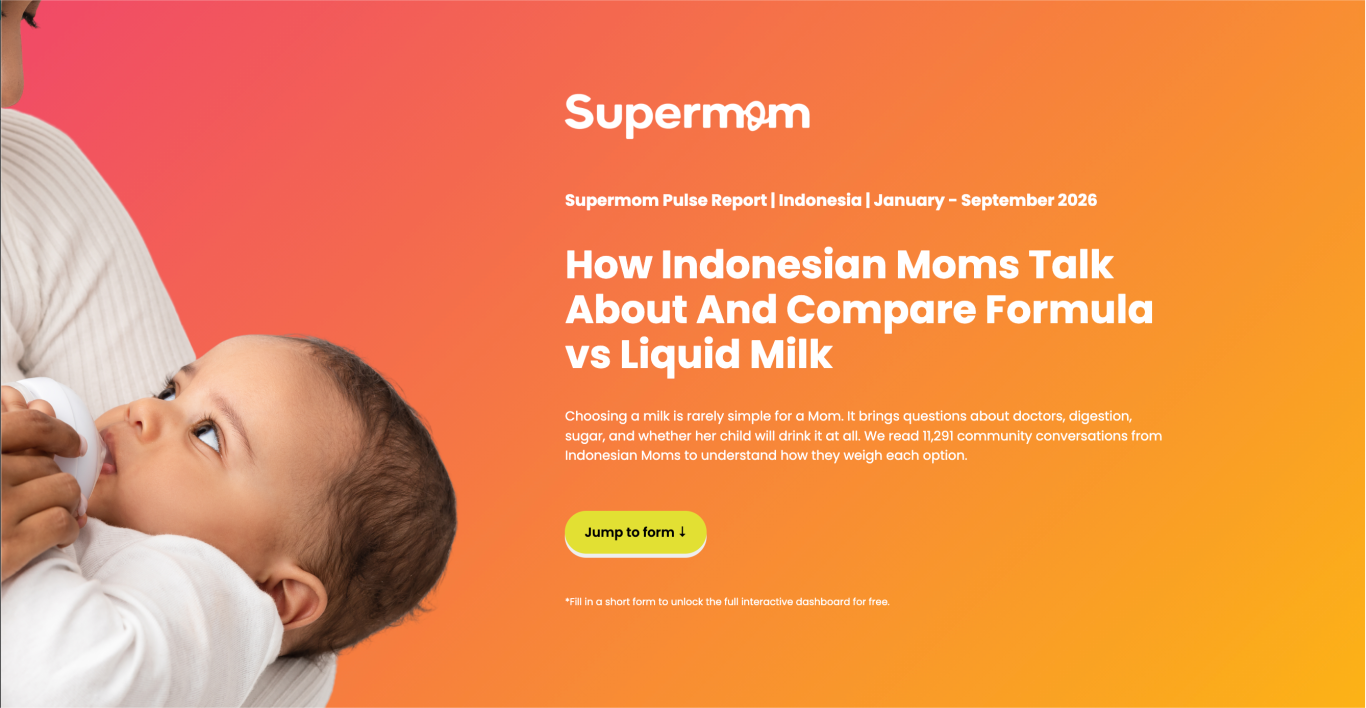
This guide explains how to gather consumer insights from organic community conversation. It uses a real Supermom Pulse study of 11,291 messages about milk from Indonesian Moms as the worked example.
In short: To gather consumer insights from Moms, listen to their unprompted conversations at scale, in their own language, over time. Code what you hear by theme and sentiment, then test every finding against real conversations before acting on it.
Why Surveys Alone Miss Part of the Story
Surveys are good at measuring what you already know to ask. They are weaker at surfacing what you did not think to ask. A Mom answering a questionnaire is also answering in a different frame of mind from a Mom asking her community for help.
Organic conversation fills that gap. It shows the language Moms actually use, the problems they raise first, and how their mood changes from month to month.
A Five-Step Approach
Step 1: Define the decision you need to inform. Start with a business question, such as how Moms compare two product types. A clear question keeps the analysis focused.
Step 2: Build a local-language keyword set. Include category terms, everyday slang, and brand names in the languages Moms use. In Indonesia, that means Bahasa Indonesia first.
Step 3: Code themes and sentiment. Sort each message by what it is about and whether it reads positive, negative, or neutral. One message can touch several themes.
Step 4: Track change over time. Look at month-by-month trends, not one snapshot. Shifts in mood often matter more than the average.
Step 5: Check findings against real conversations. Keep only the insights that real messages support, then turn them into directional implications for the brand.

Worked Example: Formula vs Liquid Milk in Indonesia
Supermom Pulse applied this approach to milk conversations from Indonesian Moms between January and September 2026. Each step surfaced something a standard survey might have missed.
Themes revealed a hidden barrier. One in 10 formula messages described a child refusing it. Refusal turned out to be the most common negative signal in formula talk.
Sentiment separated the categories. 27.7% of formula messages read negative, against 15.2% for liquid milk. Moms judge the two by different rules.
Context showed who Moms trust. About 1 in 4 formula messages involved a doctor, a prescription, or a medical reason.
Tracking over time caught a turning point. Formula's net sentiment moved from −16.0 in January to +0.7 in September, its first net positive month.
Together, these findings give milk brands a sharper picture than a single survey score could.
Listening and Surveys Work Best Together
Listening is strongest for discovering the why and spotting change early. Surveys are strongest for sizing and validating what listening finds. Many brands get the clearest view by using listening to shape the questions a survey then measures.
Supermom Crowd Intelligence brings both together, drawing on Supermom's parenting communities across Singapore, Malaysia, and Indonesia.
Frequently Asked Question
What is the best way to gather consumer insights from Moms? Combine listening and surveys. Listening to organic conversations shows what Moms raise unprompted, while surveys measure how widely those views are held.
What is social listening in consumer research? It is the analysis of unprompted conversations to understand what consumers talk about, how they feel, and how that changes over time.
How is Supermom Pulse different from a survey? Supermom Pulse analyses organic conversations across Supermom's parenting communities. It captures what Moms say in their own words, without a questionnaire shaping the answer.
Source: Supermom Pulse, Formula vs Liquid Milk, Indonesia, January to September 2026. 11,291 community messages. Figures are directional, and brand names are anonymised.
Explore The Full Dashboard

About Supermom
Let’s Discuss!
Indonesia: +62 812-5238-6735


